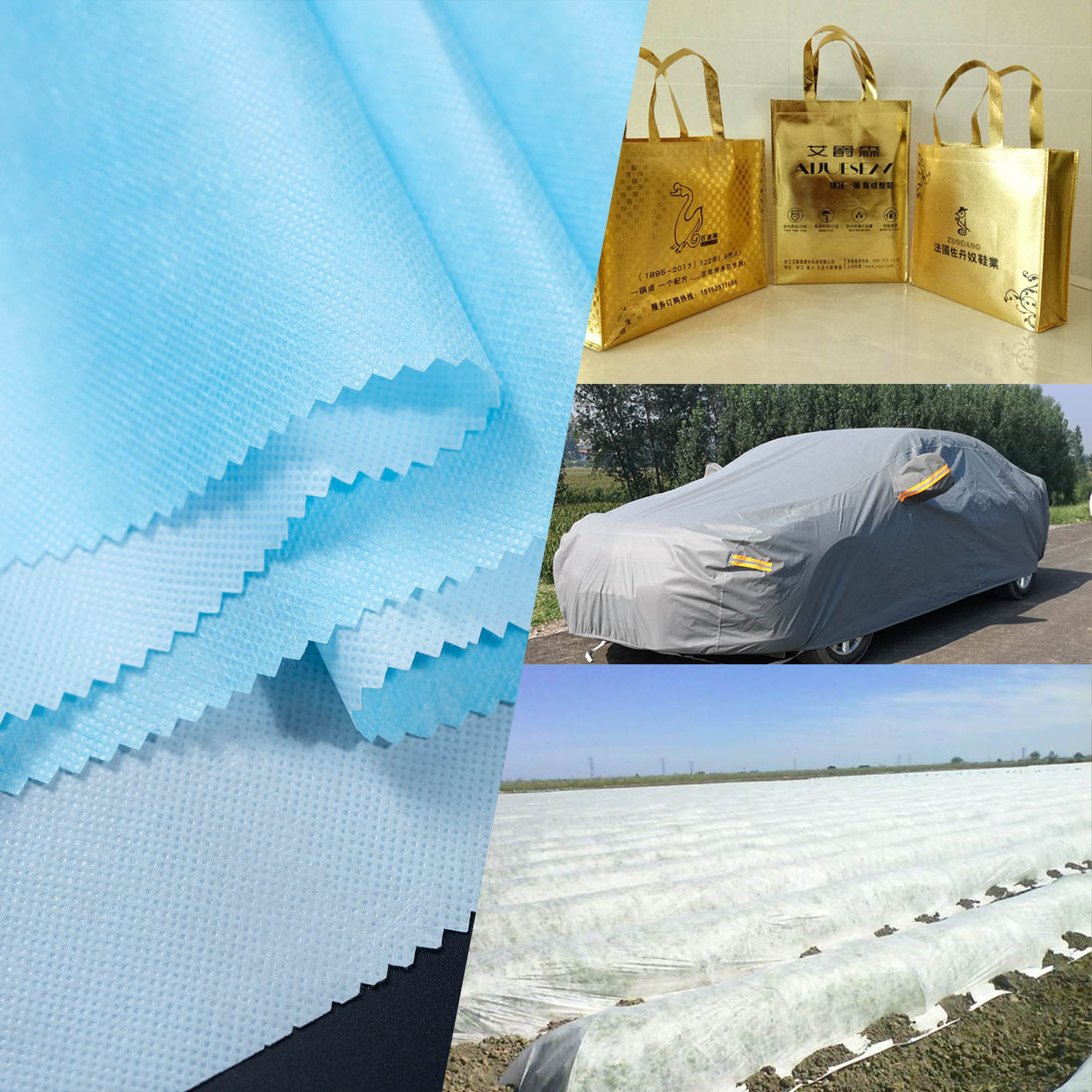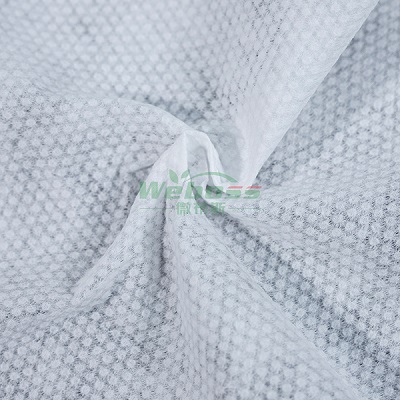
What is Spunmelt Nonwoven Fabric?How Does It Work?
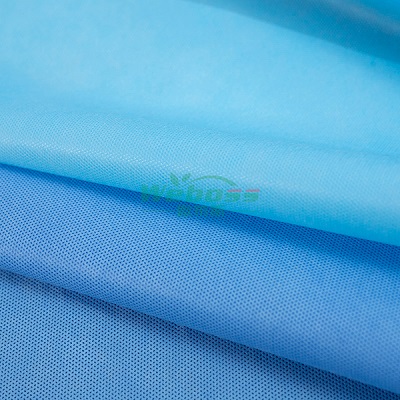
Spunmelt nonwoven fabric is a multi-layered material combining spunbond and meltblown technologies to deliver strength, breathability, and barrier performance. Common configurations include SMS, SMMS, SMMMS, and SSMMS, widely used in medical, hygiene, and industrial applications. It outperforms other nonwovens by balancing mechanical strength and filtration while supporting cost-effective, high-volume production. Manufactured through polymer extrusion, web formation, bonding, and finishing, spunmelt fabrics can feature hydrophilic, anti-bacterial, anti-static, and “Three-Anti” treatments. Weboss offers customizable options in weight, width, color, and performance, suitable for surgical gowns, diapers, wipes, home textiles, and medical curtains. Spunmelt fabrics are recyclable and essential for disposable and high-performance products.
Definition of Spunmelt Nonwoven Fabric
Spunmelt nonwoven fabric refers to a class of nonwoven materials produced by combining spunbond and meltblown web technologies into a consolidated structure. Unlike woven textiles that require yarn and loom processes, spunmelt fabrics are created by extruding polymers directly into filaments and bonding them into a web, delivering strength, barrier performance, and breathability in a single material.
In typical configurations — such as SMS, SMMS, SMMMS, and SSMMS — spunbond layers provide mechanical strength, while one or more meltblown layers introduce fine filtration and liquid barrier properties. This multi-layered architecture underpins spunmelt’s widespread use across hygiene, medical, and industrial sectors.
Key Characteristics
- Lightweight and breathable: Supports prolonged wear in protective applications.
- Barrier performance: Meltblown layers strengthen resistance to fluids and particulates.
- Mechanical integrity: Spunbond constituents deliver tensile strength and durability.
- Process versatility: Available in a range of GSM weights and widths for diverse product requirements.
This combination of properties makes spunmelt nonwoven fabric a backbone material in single-use medical and hygiene products, performance wearables, and industrial filtration media.
Spunmelt Nonwoven Manufacturing Process
The spunmelt production line integrates several steps into a continuous workflow. This is distinct from traditional textile processes and is crucial to understanding performance outcomes.
Polymer Preparation & Extrusion
Thermoplastic polymers — most commonly polypropylene (PP) — are fed into extruders where they are heated above melting point and forced through spinnerets. Meltblown systems also use high-velocity hot air to attenuate polymer streams into microfibers.
Web Formation
Spunbond filaments are laid onto a moving belt in a random web.
Meltblown microfibers are deposited between or alongside spunbond layers for barrier performance.
The relative arrangement and number of layers define the configuration such as SMS or SMMS.
Bonding
The loose web is thermally consolidated by heated rollers or air knives, fusing fibers at contact points. This bonding creates a coherent fabric with mechanical integrity.
Finishing & Winding
Post-bonding, fabric may undergo calendaring, surface treatments (e.g., hydrophilic finishes), and slitting before being wound into rolls for shipment.
The result is a continuous, high-strength fabric that combines textile-like performance with industrial-scale production efficiency.
Core Configurations: SMS, SMMS, SMMMS, SSMMS
Spunmelt nonwoven fabrics are categorized by their layer sequences. Each configuration serves different functional requirements.
| Configuration | Layer Structure | Main Function |
Typical Use |
| SMS | Spunbond / Meltblown / Spunbond | Balanced strength and barrier | Surgical gowns, diapers |
| SMMS | Spunbond / Meltblown / Meltblown / Spunbond | Enhanced filtration and liquid resistance | Medical protective apparel |
| SMMMS | Spunbond / Meltblown x3 / Spunbond | Higher barrier with controlled breathability | Isolation gowns, medical drapes |
| SSMMS | Spunbond x2 / Meltblown x2 / Spunbond | Increased mechanical strength with barrier | Industrial and healthcare protection |
The choice of configuration depends on regulatory requirements, end-use environment, and cost-performance considerations.
Why Choose Spunmelt Nonwoven Fabric?
To understand where spunmelt sits in the nonwoven spectrum, the table below compares it with other common nonwoven types:
| Fabric Type | Main Process | Strength | Filtration | Typical Uses |
| Spunmelt (SMS/SMMS/SSMMS) | Spunbond + Meltblown Layers | High | Excellent | Medical gowns, masks, diapers, wipes, protective apparel |
| Spunbond-only | Extrusion into spunbond web | High | Moderate | Bag covers, agricultural films, geotextiles |
| Meltblown-only | High-velocity air quenching | Moderate | Superior | Filters, respirators |
| Spunlace (hydroentangled) | Water jet entanglement | Medium | Good | Wipes, soft goods |
| Needlepunched | Mechanical bonding | Low–Med | Varies | Insulation, automotive liners |
Key reasons for choosing spunmelt nonwoven include:
- Ability to combine mechanical strength and filtration in one material
- Compatibility with medical and hygiene standards
- Consistent quality in large-scale production
These factors explain its widespread adoption in disposable protective products.
Application Highlights
Weboss spunmelt fabric is suited for:
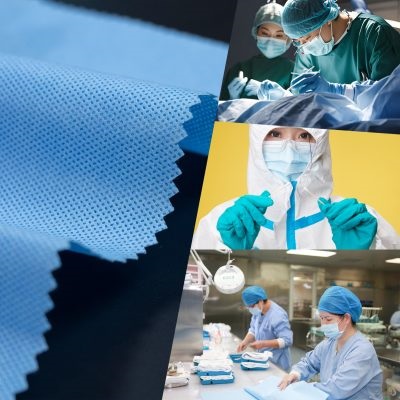
spunmelt non woven fabirc application
- Pillow covers and other home textiles
- Disposable diapers and wipes
- Surgical gowns and isolation apparel
- Medical curtains and protective drapes
Our material stability and finish options make it easier for OEMs and contract manufacturers to meet stringent product requirements with consistent quality.
Why Choose Weboss Spunmelt Nonwoven Fabric?
If you’re sourcing spunmelt nonwoven fabric for commercial products, Weboss offers a strategic advantage in both product range and quality consistency.
Product specifications include:
- Configurations: SMS, SMMS, SMMMS, SSMMS
- Weight Range: 10–60 gsm with customizable options
- Width: Up to 320 cm
- Colors: Standard white, light blue, green, pink
spunmelt nonwoven
Performance Treatments:
- Hydrophilic
- Anti-bacterial
- Anti-static
- “Three-Anti”(water, oil, and alcohol resistance)
These specifications cover essential performance criteria for hygiene products, medical disposables, and home textile applications.
FAQs
Q1: What does SMS mean in spunmelt nonwoven?
A: SMS stands for Spunbond–Meltblown–Spunbond, a three-layer configuration that balances strength and liquid barrier performance, commonly used in medical and hygiene products.
Q2: How does spunmelt differ from traditional woven fabrics?
A: Unlike woven textiles, spunmelt fabrics are not woven or knitted but formed from bonded fiber webs, allowing efficient production and specialized performance such as filtration and fluid resistance.
Q3: Can spunmelt nonwoven fabric be recycled?
A: Yes, when produced from polypropylene, these fabrics can be recycled or manufactured from recycled feedstocks, supporting sustainability goals.
Conclusion
Spunmelt nonwoven fabric is an engineered material designed to balance strength, filtration, and production efficiency. Its layered structures and scalable manufacturing process support a wide range of medical, hygiene, and industrial applications. For detailed specifications, customization options, or sourcing information, contact us to discuss your application requirements with the technical team.
continue reading
Related Posts

This article explains laminated nonwoven fabric, its structure, materials, functions, applications, and how to choose the right option for different uses.
-
Spunmelt nonwoven fabric is a multi-layered material combining spunbond and meltblown technologies to deliver strength, breathability, and barrier performance. Manufactured through polymer extrusion, web formation, bonding, and finishing, spunmelt fabrics can feature hydrophilic, anti-bacterial, anti-static, and “Three-Anti” treatments.

Spunlace nonwoven fabric is a mechanically bonded material produced by entangling fibers with high-pressure water jets rather than thermal or chemical bonding.