How Is Meltblown Fabric Made?
What Is Meltblown Fabric?
Before talking about the process, let’s briefly understand what meltblown fabric is.
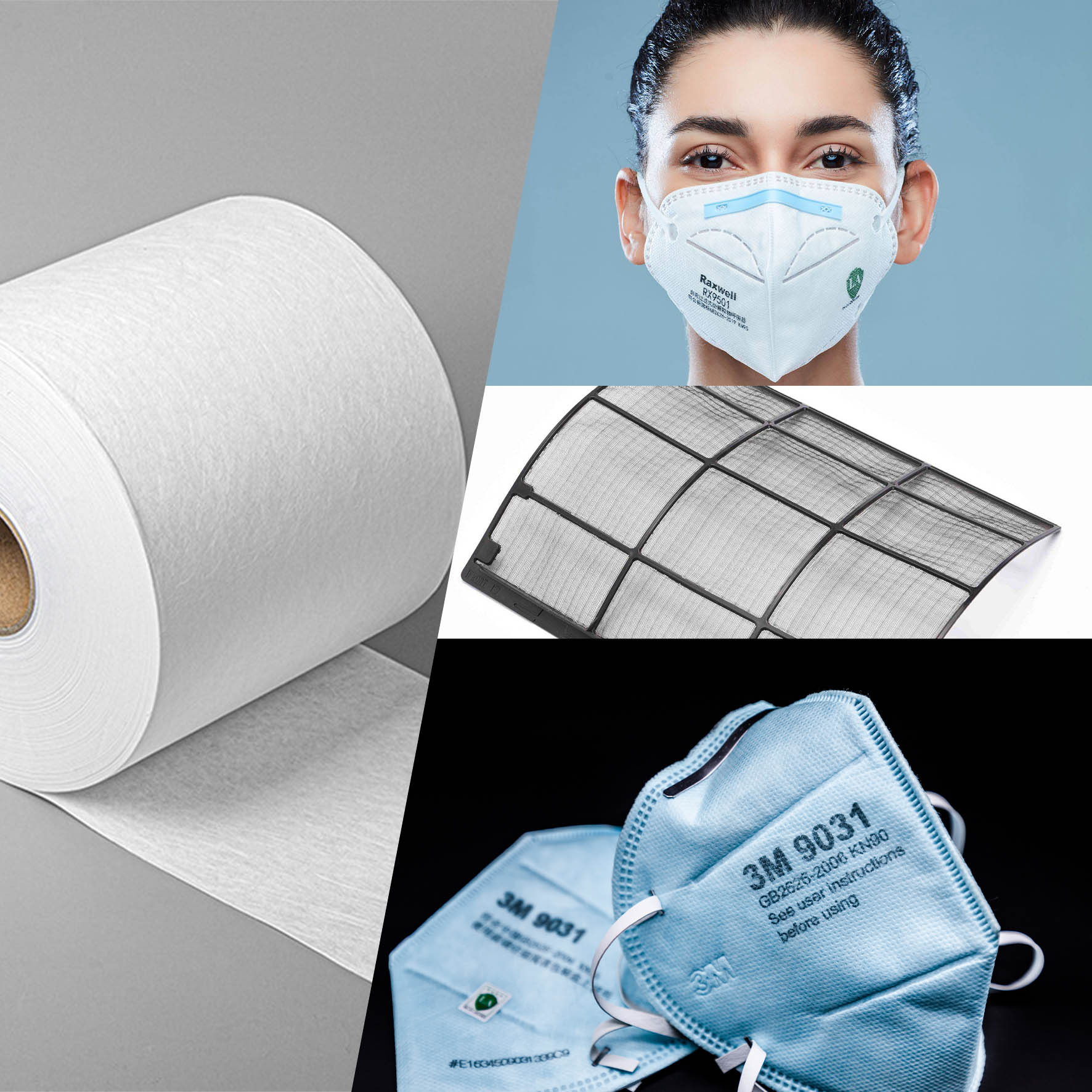
Meltblown fabric is a type of nonwoven material made from ultra-fine fibers, usually polypropylene (PP).
Its biggest advantage is:
👉 very fine fiber diameter = excellent filtration
That’s why it is widely used in:
- face masks
- respirators
- air filters
- medical filtration products
But what makes these fibers so fine?
The answer is in the production process.
How Is Meltblown Fabric Made? Step by Step
The meltblown nonwoven fabric process looks simple on paper—but controlling it well is not easy.
Let’s break it down.
Step 1: Raw Material Feeding
The process usually starts with polypropylene (PP) resin.
This raw material is fed into the extruder.
Important note:
👉 not all PP is suitable for meltblown.
Meltblown usually requires:
- high melt flow index (MFI)
- stable resin quality
Poor raw materials often lead to unstable filtration.
Step 2: Polymer Melting
Inside the extruder, the PP pellets are heated until they melt.
The material becomes a hot liquid polymer.
Typical temperatures vary depending on the machine and resin, but control here is critical.
If temperature is unstable:
- fibers may break
- fiber diameter becomes inconsistent
Step 3: Extrusion Through Spinneret
The melted polymer is pushed through a spinneret die containing many tiny holes.
At this stage, the material begins forming very thin strands.
But they are not yet “microfibers.”
That happens in the next step.
Step 4: High-Speed Hot Air Drawing
This is the heart of meltblown technology.
High-speed hot air stretches the polymer strands into ultra-fine fibers.
This is what makes meltblown unique.
Typical fiber diameter:
- often between 1–5 microns
For comparison:
- human hair is about 70 microns
That’s why meltblown feels so soft and lightweight.
Step 5: Fiber Web Formation
The fine fibers are blown onto a moving collector belt.
They randomly overlap and form a web.
No weaving.
No knitting.
That’s why it is called nonwoven fabric.
Step 6: Cooling and Bonding
As fibers cool, they naturally bond together.
This creates the final fabric structure.
At this stage, the material already exists—but may not yet be filtration-grade.
Step 7: Electret Treatment (Optional but Common)
For filtration applications, this is usually added.
Electret treatment gives the fabric a static charge.
That helps it:
- attract particles
- improve filtration efficiency
Without this step, many medical mask materials would not reach required standards.
Step 8: Slitting and Packaging
Finally, the fabric is:
- slit into required widths
- rolled
- packed for shipment
Good packaging matters because:
👉 humidity can damage electret performance
Meltblown Production Flow Chart
A simple process overview:
| Step | Process |
|---|---|
| 1 | PP raw material feeding |
| 2 | Polymer melting |
| 3 | Extrusion through die |
| 4 | Hot air fiber drawing |
| 5 | Web formation |
| 6 | Cooling and bonding |
| 7 | Electret treatment (optional) |
| 8 | Slitting and packaging |
What Affects Meltblown Fabric Quality?
This is where many buyers focus—and rightly so.
1. Raw Material Quality
Low-grade PP can cause:
- unstable fibers
- weak filtration
2. Machine Quality
Better machines usually mean:
- finer fibers
- more stable production
This directly affects performance.
3. Temperature Control
Even small changes can affect:
- fiber thickness
- filtration efficiency
4. Electret Process
This often determines:
- whether the product performs at 95% or 99%
Very important.
5. Operator Experience
This is often overlooked.
Two factories may use similar machines—but get different results.
Why?
👉 experience matters.
Why Is Meltblown Fabric More Expensive Than Spunbond?
Customers ask this a lot.
Main reasons:
- finer fibers
- more complex equipment
- slower production
- higher technical requirements
In simple terms:
👉 it is harder to make.
Common Mistakes When Buying Meltblown Fabric
1. Focusing Only on GSM
Same GSM does not mean same quality.
Process matters.
2. Ignoring Electret Treatment
For filtration products, this is critical.
3. Buying Only on Price
Cheap meltblown often means:
- unstable quality
- inconsistent performance
FAQ About Meltblown Fabric Production
1. What raw material is used for meltblown fabric?
Usually polypropylene (PP).
2. Why are meltblown fibers so fine?
Because high-speed hot air stretches them.
3. Is meltblown woven?
No, it is a nonwoven material.
4. What is the main purpose of meltblown fabric?
Filtration.
5. Does all meltblown use electret treatment?
No, but filtration-grade material usually does.
6. Why is meltblown more expensive than spunbond?
Because production is more complex.
7. Can meltblown be customized?
Yes, including GSM, width, and filtration level.
8. Does machine quality matter?
Absolutely.
Why Choose Weboss as Your Meltblown Fabric Supplier?
At Weboss, we understand that meltblown fabric quality starts with the production process—not just the final specification.
From our experience:
Customers often focus on price, but the real difference lies in:
- raw material quality
- machine stability
- electret treatment
- production control
We offer:
- 10+ years of nonwoven export experience
- professional meltblown supply support
- filtration-grade material options
- testing and documentation support
- customized solutions
- stable global delivery
👉 We help customers understand what they’re buying—not just what they’re paying for.
Contact Us
If you are looking for a reliable meltblown nonwoven fabric supplier, feel free to contact us:
- TEL: +86-21-33608891
- FAX: +86-21-33608892
- Email: info@webosstex.com
continue reading
Related Posts

Apertured Spunlace has an open mesh structure for better wiping, liquid pickup and airflow in dry towels, wipes and beauty products.

Polyester Spunlace for Wet Wipes offers high wet strength and durability for cleaning, disinfecting and industrial wipes.
-
Cotton Spunlace for Wet Wipes offers a soft, absorbent and natural feel for premium baby, facial and personal care wipes.