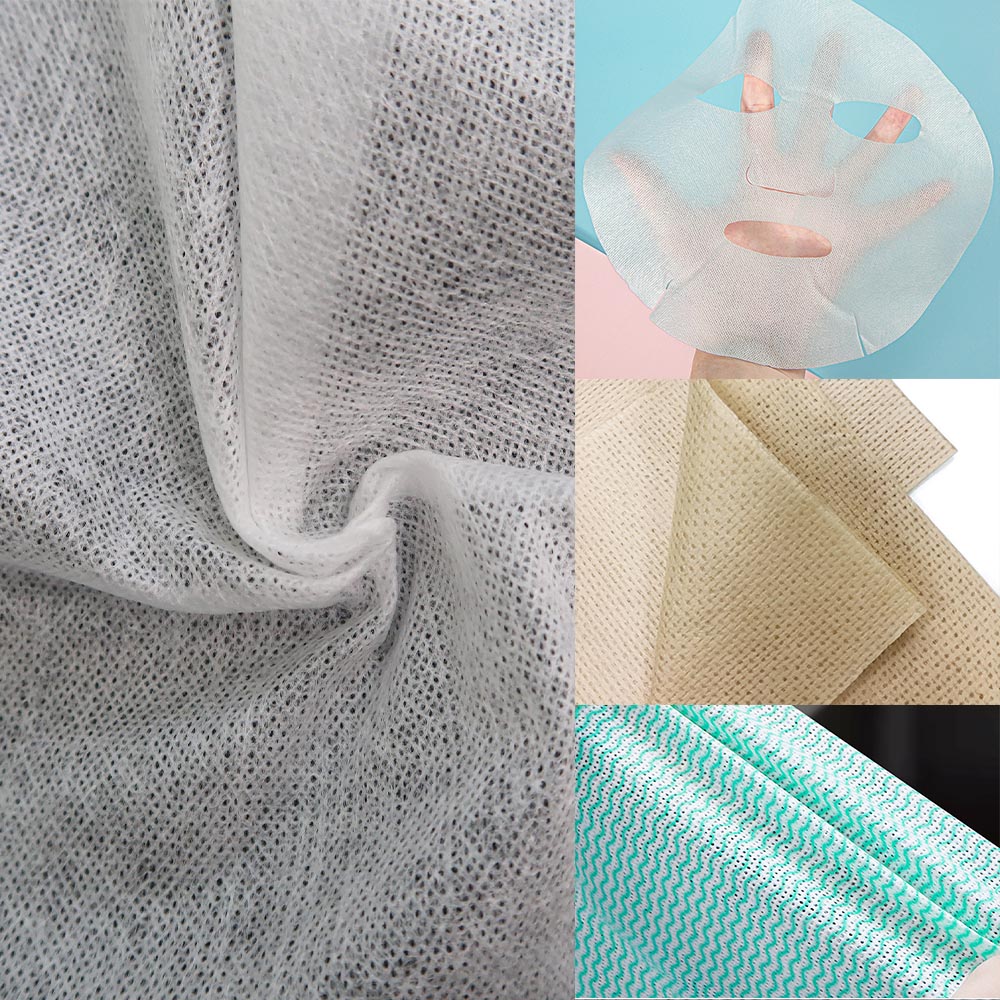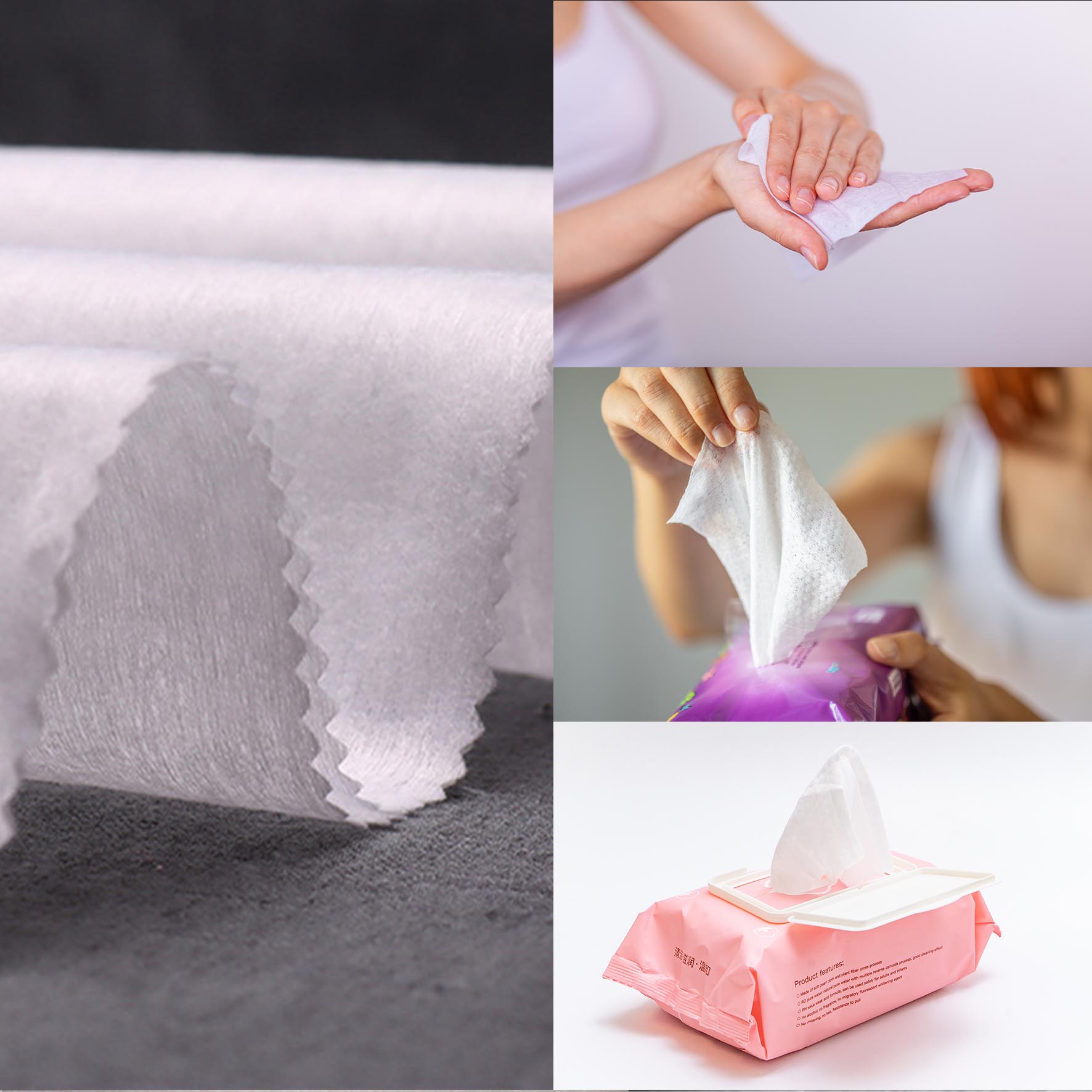
Is Cotton Spunlace for Wet Wipes Worth Choosing?
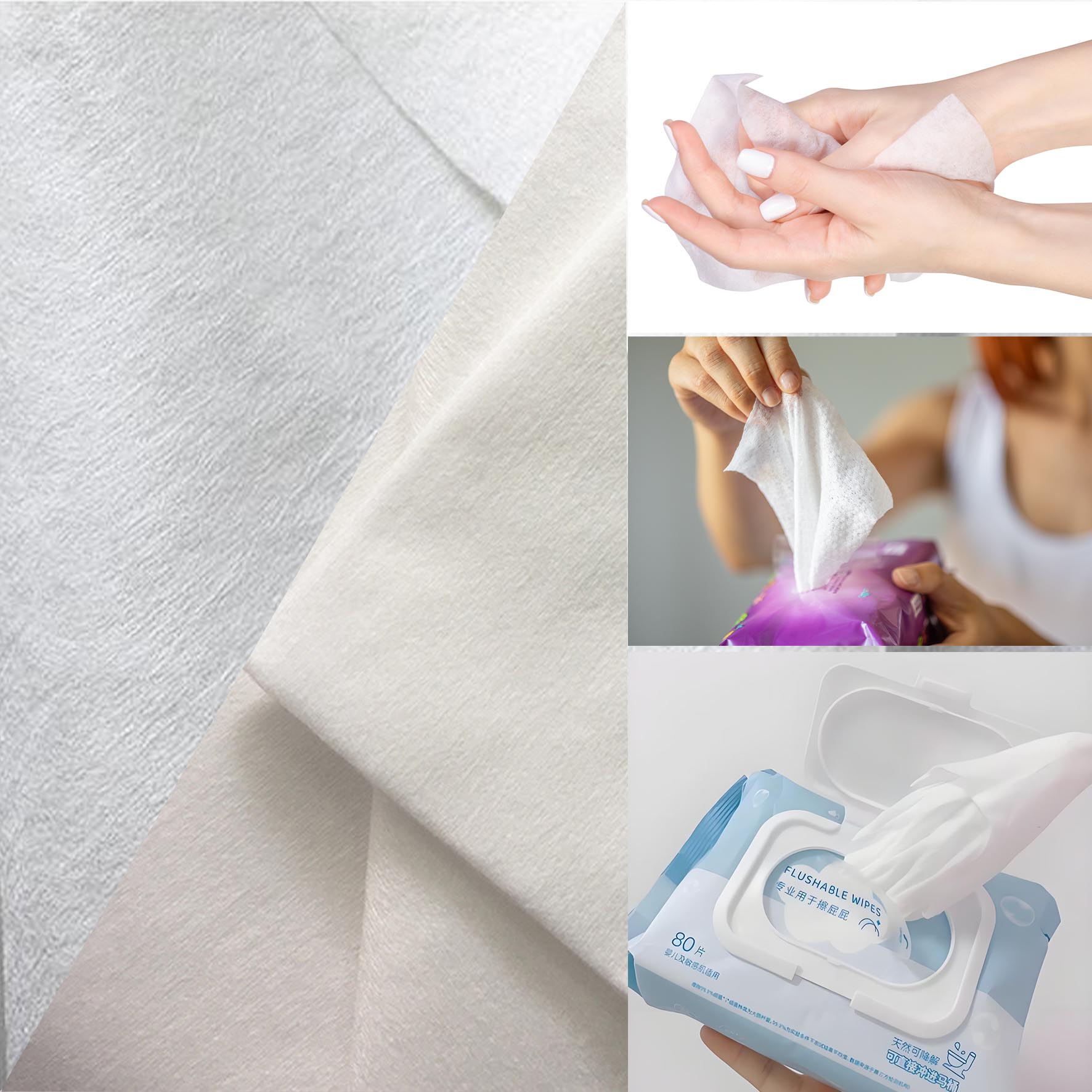
Why Do Some Wet Wipe Brands Choose Cotton?
Cotton is familiar to consumers. People already associate it with softness, skin contact, and personal care products, so it has a natural advantage when a wet wipe brand wants to move into a more premium position.
For manufacturers, however, the decision is not simply “cotton is better.”
Cotton Spunlace for Wet Wipes normally costs more than standard polyester/viscose spunlace. The real question is whether the final product can benefit from that additional cost.
Cotton is particularly worth considering when the product focuses on:
- Baby care
- Facial cleansing
- Sensitive skin
- Makeup removal
- Premium personal hygiene
- Natural fiber positioning
For basic household or low-price wipes, cotton may not provide enough extra value to justify the higher material cost.
What Is Cotton Spunlace for Wet Wipes?
Cotton spunlace is a nonwoven fabric made with cotton fibers that are mechanically entangled by high-pressure water jets.
No weaving or knitting is required.
For wet wipe applications, cotton provides several useful properties:
- Soft hand feel
- High liquid absorbency
- Comfortable skin contact
- Natural fiber image
- Good suitability for disposable personal care products
But buyers should pay attention to the actual composition.
A product described as “cotton spunlace” may be:
- 100% cotton
- Cotton/viscose blend
- Cotton/lyocell blend
- Cotton blended with other fibers
These are different products.
If your packaging or marketing intends to claim 100% cotton, the complete fiber composition should be confirmed before production.
Where Does Cotton Spunlace Make the Most Sense?
Premium Baby Wipes
Baby wipes are probably one of the most natural applications.
Parents generally care about:
- Softness
- Skin comfort
- Material origin
- Product safety
- Low irritation potential
A soft cotton substrate can support a premium baby-care concept very well.
However, softness alone is not enough. The material must also remain strong after lotion is added and pass smoothly through the converting and dispensing process.
Facial Cleansing Wipes
Facial skin makes texture especially important.
Cotton spunlace can provide a soft, familiar touch and good liquid uptake, making it suitable for:
- Daily facial wipes
- Sensitive-skin wipes
- Cleansing wipes
- Skincare wipes
For this application, a smoother pattern is often more important than simply increasing GSM.
Makeup Remover Wipes
Makeup remover wipes need a slightly different balance.
The material must be soft enough for repeated facial contact but should also provide enough surface friction to remove:
- Foundation
- Sunscreen
- Lip products
- Daily dirt and sebum
A lightly textured or apertured cotton spunlace may therefore work better than an extremely smooth fabric.
Feminine and Personal Care Wipes
Cotton is also suitable for higher-end personal hygiene products where consumers pay close attention to material comfort.
Here, a natural-fiber story can also help distinguish the finished product from conventional polyester-containing wipes.
100% Cotton or Cotton Blend: Which Should You Choose?
This is an important purchasing decision.
100% Cotton
Choose 100% cotton when your priority is:
- Natural fiber positioning
- Premium hand feel
- Cotton marketing claims
- High absorbency
- Skin-contact applications
The trade-off is usually higher cost.
Cotton + Viscose
This combination can provide:
- Good softness
- Strong absorbency
- Lower cost than pure cotton
- Easier performance balancing
It can be practical for brands that want some cotton content without moving to a full 100% cotton substrate.
Cotton + Lyocell
This is more suitable for premium products.
Lyocell can help improve:
- Smoothness
- Wet strength
- Fabric consistency
The cost is also higher, so this combination is more common in premium skincare and baby-care positioning.
How Does Cotton Compare with Other Premium Wet Wipe Fibers?
| Material | Softness | Absorbency | Wet Strength | Cost | Typical Positioning |
|---|---|---|---|---|---|
| Cotton | Excellent | Excellent | Medium | High | Premium baby and skincare wipes |
| Viscose | Very Good | Excellent | Medium | Medium | Mainstream and premium wipes |
| Lyocell | Excellent | Excellent | Good | High | Premium and sustainable wipes |
| Bamboo-based Fiber | Very Good | Good | Medium | Higher | Natural-positioned wipes |
| Polyester/Viscose | Good | Good | Good | Lower | Mainstream wet wipes |
There is no universal winner.
If cost and strength matter most, polyester/viscose may be more practical.
If softness and natural positioning matter more, Cotton Spunlace for Wet Wipes becomes much more attractive.
What GSM Is Suitable for Cotton Wet Wipes?
Cotton spunlace is often used in medium- and higher-grade products, so buyers usually do not choose extremely low GSM.
A practical starting point might be:
| Application | Suggested Starting Range |
|---|---|
| Baby Wipes | 45–60 GSM |
| Premium Baby Wipes | 55–70 GSM |
| Facial Wipes | 45–65 GSM |
| Makeup Remover Wipes | 50–70 GSM |
| Personal Care Wipes | 50–70 GSM |
These are not fixed standards.
A well-made 50 GSM fabric can sometimes feel better than a poorly structured 60 GSM fabric.
Fiber quality, web uniformity and embossing all influence the final result.
Which Surface Pattern Works Best?
For Cotton Spunlace for Wet Wipes, surface design should follow the application.
Plain
Best for:
- Sensitive skin
- Baby wipes
- Facial wipes
It provides a smoother contact surface.
Pearl or Soft Embossed
Good for:
- Premium baby wipes
- Adult care wipes
- Personal care wipes
The raised pattern gives the wipe a fuller appearance.
Mesh or Apertured
Better suited to:
- Makeup remover wipes
- Cleansing wipes
- Light household wiping
The open structure can help pick up residue more effectively.
The strongest-looking pattern is not always the best. For delicate skin applications, an aggressive texture may reduce comfort.
What Should Buyers Check Before Ordering?
Confirm the Cotton Content
Do not rely only on the commercial product name.
Ask for the exact composition.
Check Fiber Cleanliness
For personal care applications, visible impurities, uneven whiteness, odors, or inconsistent fiber quality can quickly affect the finished product.
Test Wet Strength
Cotton absorbs liquid very well, but the substrate still needs enough strength after saturation.
Evaluate both dry and wet tensile performance.
Check Linting
Facial and baby wipes should have good surface integrity.
Excessive loose fibers can create a poor user experience.
Test the Finished Lotion
The dry fabric sample is only the beginning.
The final wipe should be tested after:
- Lotion addition
- Folding
- Packaging
- Storage
- Dispensing
A substrate that feels excellent when dry may behave differently after several weeks inside a wet wipe package.
Is Cotton Spunlace More Sustainable?
Cotton is a natural cellulose fiber and does not contain conventional plastic when the fabric is genuinely 100% cotton.
However, environmental claims should still be made carefully.
The final wet wipe may also contain:
- Chemical finishes
- Lotion ingredients
- Printing materials
- Plastic packaging
So “100% cotton substrate” does not automatically mean the entire finished product is biodegradable, plastic-free, or compostable.
For EEAT and regulatory reasons, environmental claims should match the actual product construction and available test evidence.
When Is Cotton Not the Best Choice?
Cotton is not suitable simply because it sounds premium.
We normally would not recommend paying the additional cost when:
- The wipe is highly price-sensitive
- Maximum wet strength is the main requirement
- The product is designed for industrial cleaning
- Consumers will not value the natural-fiber positioning
- A viscose or polyester/viscose construction already meets the target performance
A good material is not the most expensive one. It is the one that fits the final product.
FAQ
1. Is Cotton Spunlace for Wet Wipes always 100% cotton?
No. Some cotton spunlace products contain viscose, lyocell, or other fibers. Always confirm the complete composition.
2. Is cotton better than viscose for baby wipes?
Not necessarily. Cotton offers strong natural-fiber positioning, while viscose usually provides excellent softness and absorbency at a lower cost.
3. What GSM is suitable for premium cotton baby wipes?
Around 55–70 GSM can be a useful starting range, but the correct GSM depends on wipe size, texture, and target price.
4. Is cotton spunlace good for facial wipes?
Yes. Its softness and absorbency make it well suited to facial cleansing and skincare products.
5. Can cotton spunlace be used for makeup remover wipes?
Yes. A lightly textured or apertured structure can improve wiping performance.
6. Is cotton spunlace biodegradable?
Cotton fiber is cellulose-based, but claims for the finished wipe should consider all components, treatments, and disposal conditions.
Why Choose Weboss?
Weboss supplies Cotton Spunlace for Wet Wipes for baby care, facial care, personal hygiene, cosmetic, and premium wipe applications.
Depending on the project, we can support different:
- Fiber compositions
- GSM options
- Plain and embossed surfaces
- Apertured structures
- Roll widths
- Roll specifications
For wet wipe projects, we also pay attention to practical performance such as:
- Softness
- Absorbency
- Dry and wet strength
- Lint control
- GSM consistency
- Surface uniformity
- Converting performance
With more than 10 years of nonwoven export experience, Weboss can support material selection, sample evaluation, quality testing, specification confirmation, documentation, and international logistics.
Contact Us
Shanghai Weboss New Material Technology Co., Ltd
TEL: +86-21-33608891
FAX: +86-21-33608892
Email: info@webosstex.com
continue reading
Related Posts

Apertured Spunlace has an open mesh structure for better wiping, liquid pickup and airflow in dry towels, wipes and beauty products.

Polyester Spunlace for Wet Wipes offers high wet strength and durability for cleaning, disinfecting and industrial wipes.
-
Cotton Spunlace for Wet Wipes offers a soft, absorbent and natural feel for premium baby, facial and personal care wipes.