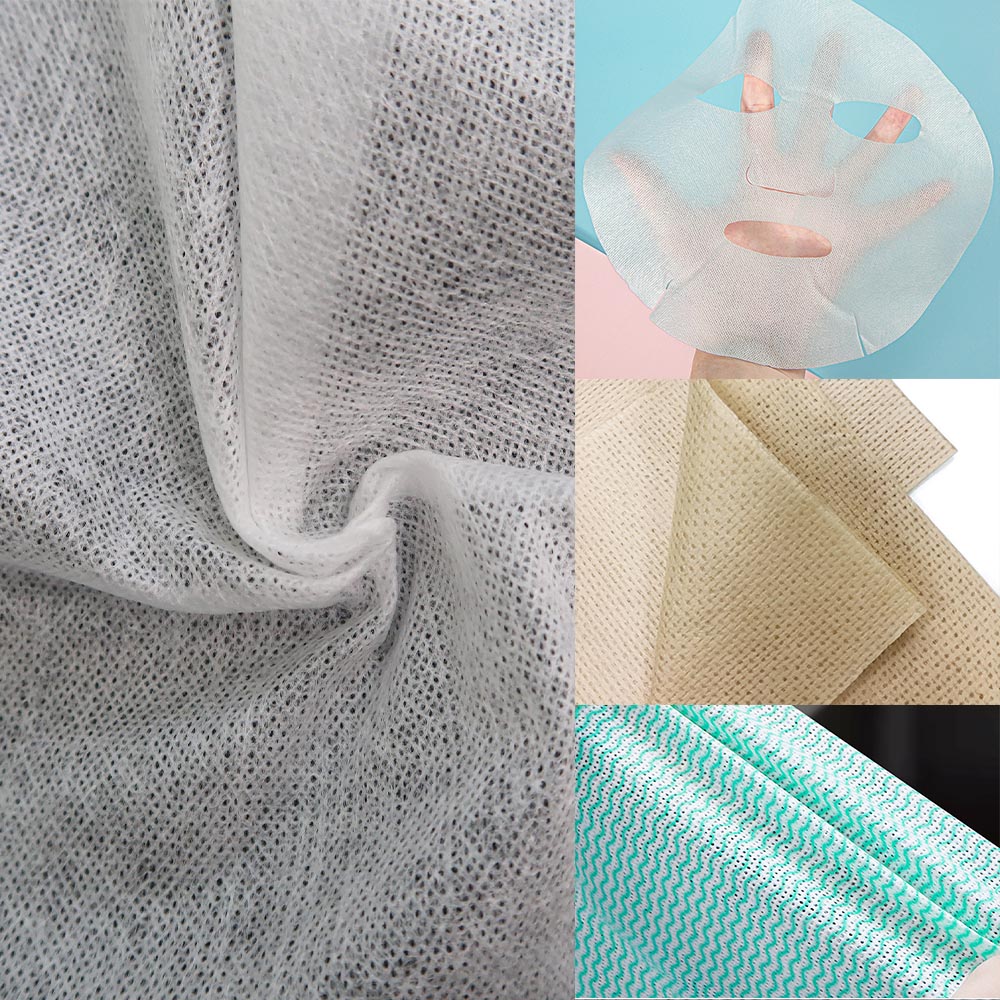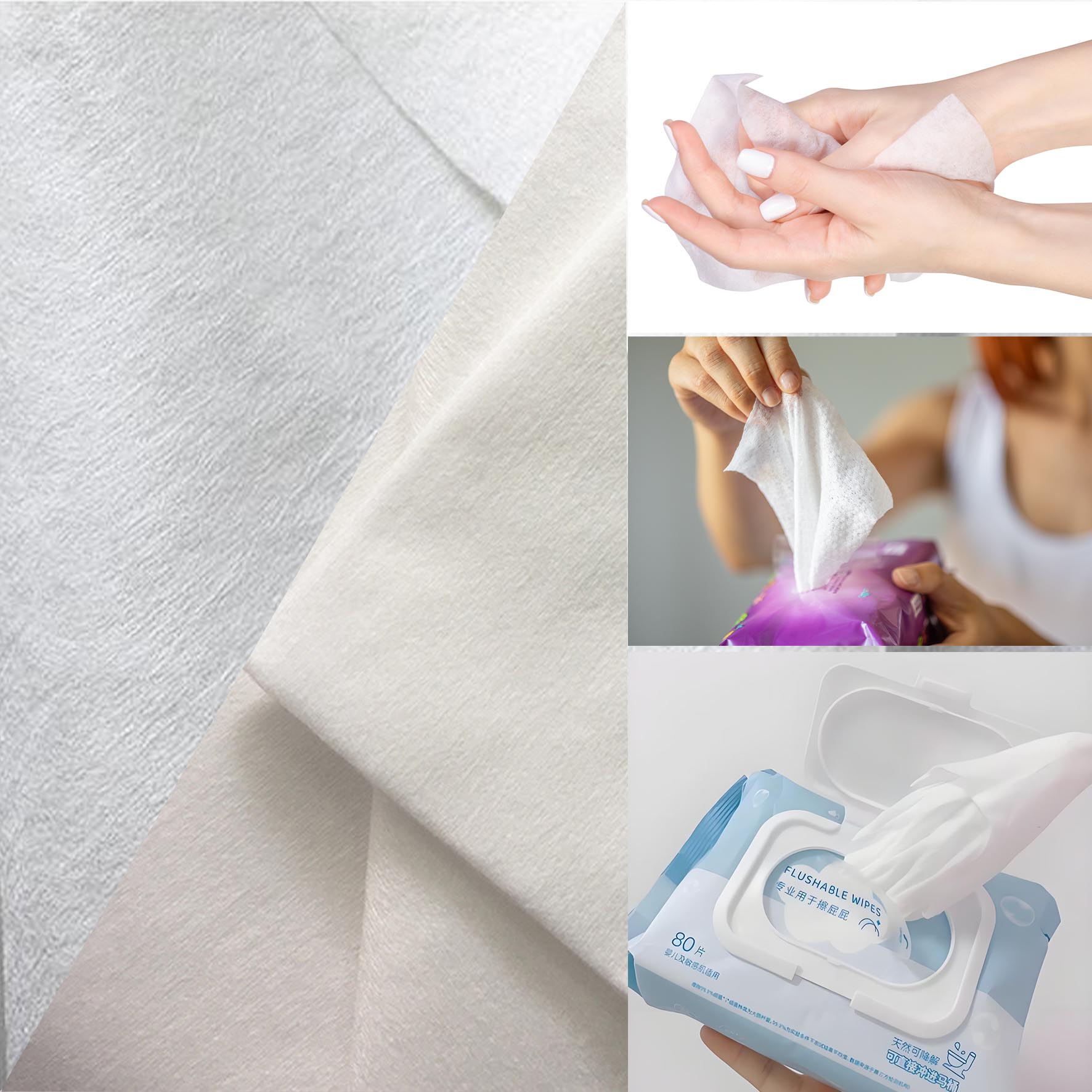
When Should You Use Polyester Spunlace for Wet Wipes?
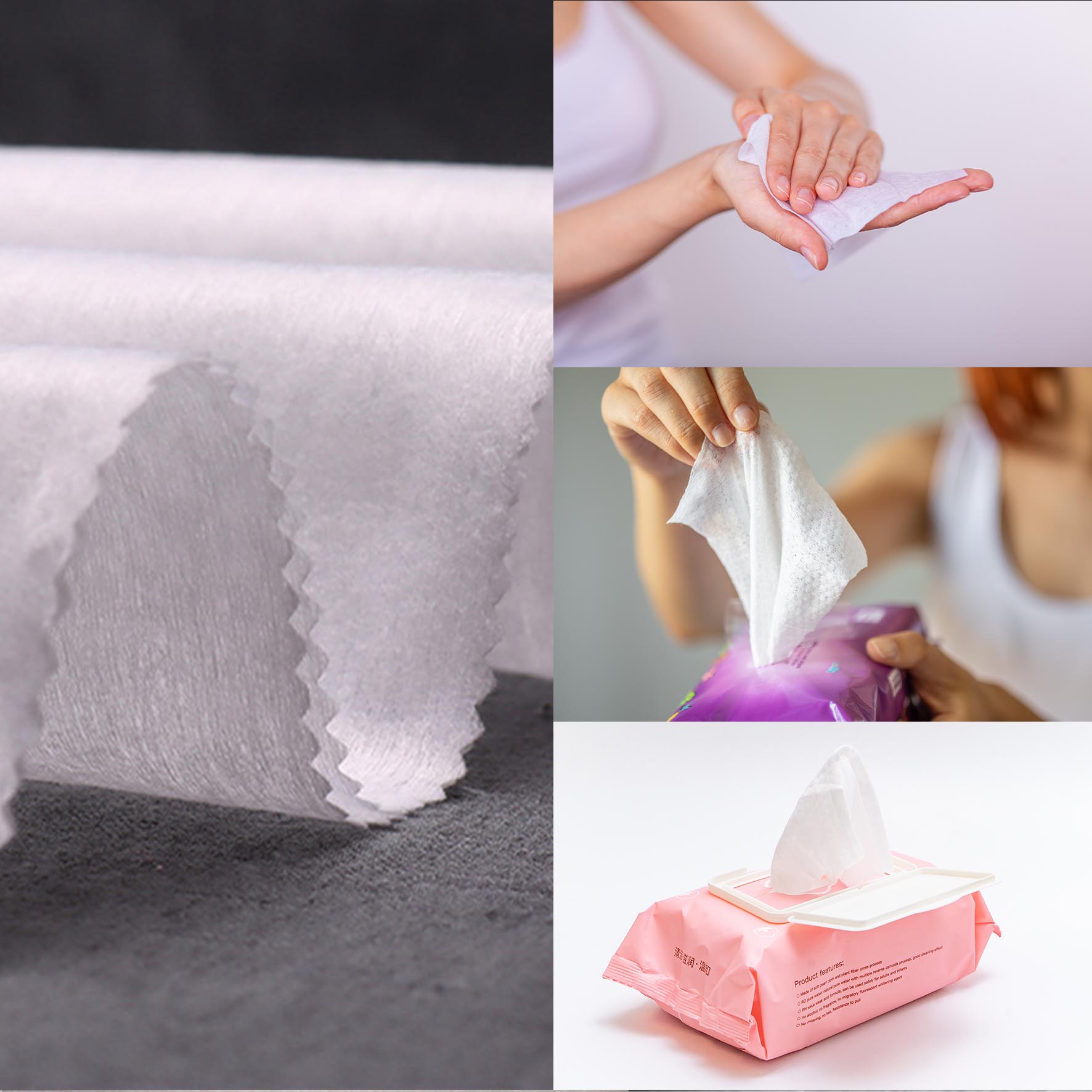
Why Is Polyester Used in Wet Wipes?
When people talk about wet wipe materials, viscose often gets more attention because it is soft and absorbs liquid easily. But softness is not the priority for every wipe.
Some products need to:
- Stay strong when fully wet
- Withstand repeated wiping
- Resist stretching or deformation
- Pick up dirt without breaking
- Keep material costs under control
That is where Polyester Spunlace for Wet Wipes becomes useful.
Polyester is especially suitable when durability matters more than maximum absorbency. It can be used alone or blended with viscose, lyocell, wood pulp, or other fibers to adjust the balance between strength and liquid handling.
So the first question should not be “Is polyester better than viscose?”
A better question is:
What does the finished wipe need to do?
What Is Polyester Spunlace for Wet Wipes?
Polyester spunlace is made from polyester staple fibers that are formed into a web and mechanically entangled using high-pressure water jets.
Unlike chemically bonded nonwovens, the fiber web gains its basic integrity through hydroentanglement.
Polyester brings several useful properties to a wet wipe substrate:
- Good tensile strength
- Strong wet durability
- Low deformation during wiping
- Good abrasion resistance
- Relatively low lint
- Stable converting performance
However, polyester does not naturally absorb water as readily as cellulose-based fibers such as viscose or cotton.
That limitation matters.
For this reason, 100% polyester is not automatically the best choice for baby wipes or premium facial wipes. In many cases, polyester is blended with absorbent fibers to get a better balance.
Where Does Polyester Spunlace Perform Best?
Disinfecting Wipes
Disinfecting wipes need enough strength to remain intact while users wipe tables, handles, equipment, and other hard surfaces.
The substrate may also remain saturated with liquid for months inside the package.
For these products, buyers usually care about:
- Wet tensile strength
- Chemical compatibility
- Low lint
- Uniform lotion distribution
- Resistance to tearing during use
Polyester-rich spunlace can be a practical option, although compatibility with the actual disinfectant formula must always be tested.
Household Cleaning Wipes
Kitchen, bathroom, floor, and multipurpose wipes often face more mechanical stress than personal care wipes.
A wipe may need to remove:
- Grease
- Food residue
- Dust
- Dirt
- Cleaning chemicals
In this situation, durability can be more valuable than an extremely soft hand feel.
Industrial Wipes
This is one of the applications where polyester shows clear advantages.
Industrial wipes may be used for:
- Machinery
- Tools
- Automotive maintenance
- Workshops
- Printing equipment
- General factory cleaning
A weak substrate can tear quickly or leave fibers behind.
Polyester Spunlace for Wet Wipes can provide the strength needed for more demanding wiping jobs.
Personal Care Wipes
Polyester can also be used in personal care wipes, but it is usually blended with viscose rather than used at 100%.
Why?
Viscose improves softness and absorbency, while polyester helps the wipe stay strong.
This is why combinations such as polyester/viscose remain common in mainstream wet wipes.
100% Polyester or Polyester/Viscose Blend?
This is probably the most important choice for buyers.
| Material | Softness | Absorbency | Wet Strength | Typical Use |
|---|---|---|---|---|
| 100% Polyester | Medium | Low | High | Industrial and strong cleaning wipes |
| Polyester-rich blend | Medium to Good | Medium | High | Cleaning and disinfecting wipes |
| 50/50 Polyester/Viscose | Good | Good | Good | General wet wipes |
| High-viscose blend | Very Good | High | Medium to Good | Baby and personal care wipes |
| 100% Viscose | Excellent | High | Medium | Premium personal care wipes |
The correct choice depends on what matters most.
If you need maximum absorbency and softness, increase the cellulose fiber content.
If you need stronger wet performance, increasing polyester can make more sense.
Why Doesn’t Polyester Absorb Water Like Viscose?
Polyester is naturally more hydrophobic than viscose.
That means water does not enter the fiber in the same way it enters a cellulose-based fiber.
However, there is an important distinction between:
- Fiber absorption
- Liquid held inside the spaces of the nonwoven structure
A polyester wipe can still carry liquid because the spunlace web contains many small spaces between fibers.
Surface treatments can also improve wettability.
This is why it is inaccurate to say that polyester “cannot hold water.” It can be used in wet products, but its liquid behavior is different from viscose.
For buyers, the important thing is to test the finished substrate with the actual lotion rather than making a decision based only on fiber names.
How Should You Choose the GSM?
There is no single GSM for polyester wet wipes.
A practical starting point might look like this:
| Application | Suggested Starting Range |
|---|---|
| Light Cleaning Wipes | 40–55 GSM |
| Disinfecting Wipes | 45–65 GSM |
| Household Cleaning Wipes | 50–70 GSM |
| Automotive Wipes | 55–80 GSM |
| Industrial Wipes | 60–100 GSM |
These figures should be treated as starting references, not fixed standards.
A higher GSM may improve thickness and strength, but it also increases:
- Material consumption
- Cost per wipe
- Package weight
- Roll diameter
- Transportation cost
Sometimes improving fiber structure or changing the blend is more effective than simply increasing GSM.
Does the Surface Pattern Matter?
Yes, particularly for cleaning applications.
Plain Pattern
Suitable when you need:
- Smooth wiping
- Lower surface friction
- A simple appearance
It can work well for disinfecting wipes and general surface cleaning.
Embossed or Pearl Pattern
Embossing gives the material more visual bulk and texture.
This can improve:
- Product appearance
- Grip during wiping
- Dirt collection
Apertured or Mesh Pattern
An open structure can be useful for picking up residue and heavier dirt.
It may work well for:
- Kitchen cleaning
- Automotive cleaning
- Industrial wiping
But a more aggressive texture is not always suitable for delicate surfaces.
The pattern should be chosen according to what will actually be cleaned.
What Should Buyers Test Before Bulk Production?
For Polyester Spunlace for Wet Wipes, a specification sheet alone is not enough.
Dry and Wet Tensile Strength
Wet strength is especially important because the wipe needs to stay intact after lotion is added.
Both machine direction and cross direction should be checked.
GSM Consistency
Large GSM variation can create different thickness and strength within the same roll.
Liquid Wetting and Retention
Since polyester behaves differently from viscose, evaluate:
- How quickly the substrate wets
- How evenly the liquid spreads
- Whether enough lotion remains in each wipe
Lint and Fiber Shedding
This matters for glass, machinery, electronics, and other surfaces where loose fibers are unwanted.
Chemical Compatibility
Disinfectants, alcohol-containing formulas, cleaners, and other liquids should be tested with the substrate before commercial production.
A wipe that performs well with water may behave differently with the final formulation.
Converting Performance
The material also needs to run smoothly through:
- Unwinding
- Folding
- Cutting
- Lotion application
- Packaging
Roll tension, width consistency, edge quality, and joints can all influence production efficiency.
Is Polyester Suitable for Eco-Friendly Wet Wipes?
This is one area where polyester has a clear limitation.
Conventional PET polyester is a synthetic plastic fiber and is not biodegradable like cellulose-based viscose, lyocell, or cotton.
So if your product positioning requires:
- Plastic-free wipes
- Cellulose-only substrates
- Biodegradable fiber claims
conventional polyester may not be the right choice.
For those projects, viscose, lyocell, cotton, or other cellulose-based materials should be considered.
On the other hand, if durability and material efficiency are more important than biodegradability, polyester may still provide a practical solution.
Good material selection is about trade-offs, not claiming that one fiber is best for everything.
When Should You Choose Polyester—and When Shouldn’t You?
Choose polyester-rich spunlace when you need:
- High wet strength
- Strong wiping resistance
- Low lint
- Better durability
- Cleaning or industrial performance
Consider another material when you need:
- Very soft baby wipes
- Premium facial wipes
- High intrinsic absorbency
- Plastic-free positioning
- Cellulose-based environmental claims
This distinction can save buyers from paying for features they do not need—or choosing a low-cost material that does not perform well enough.
FAQ
1. Is Polyester Spunlace for Wet Wipes suitable for disinfecting wipes?
Yes. Its wet strength and durability can make it suitable, but compatibility with the disinfectant formulation should be tested.
2. Can 100% polyester be used for wet wipes?
Yes, particularly for industrial and cleaning wipes. For personal care products, polyester is often blended with viscose.
3. Is polyester spunlace absorbent?
It can hold liquid within the nonwoven structure, but the polyester fiber itself is less absorbent than viscose, cotton, or lyocell.
4. Which is better for wet wipes, polyester or viscose?
Neither is universally better. Polyester offers more strength, while viscose generally provides better softness and absorbency.
5. What GSM should I choose?
It depends on the application. Many cleaning wipes fall between roughly 45 and 80 GSM, while heavier industrial products may use higher weights.
6. Is polyester spunlace biodegradable?
Conventional PET polyester is not biodegradable in the same way as cellulose-based fibers, so it is not suitable for products requiring a fully biodegradable fiber composition.
Why Choose Weboss?
Weboss supplies Polyester Spunlace for Wet Wipes as well as polyester/viscose blends for different cleaning and personal care applications.
Depending on the project, we can support:
- Different polyester/viscose ratios
- Multiple GSM options
- Plain, embossed and apertured surfaces
- Customized widths and roll sizes
- Cleaning, disinfecting and industrial wipe applications
For quality evaluation, relevant checks can include:
- GSM and uniformity
- Dry and wet tensile strength
- Absorbency and wetting performance
- Lint performance
- Surface appearance
- Roll quality
- Formula compatibility testing
With more than 10 years of nonwoven export experience, Weboss helps customers choose the material according to the actual wipe application rather than simply recommending the highest GSM or the most expensive fiber.
Contact Us
Shanghai Weboss New Material Technology Co., Ltd
TEL: +86-21-33608891
FAX: +86-21-33608892
Email: info@webosstex.com
continue reading
Related Posts

Apertured Spunlace has an open mesh structure for better wiping, liquid pickup and airflow in dry towels, wipes and beauty products.
-
Polyester Spunlace for Wet Wipes offers high wet strength and durability for cleaning, disinfecting and industrial wipes.

Cotton Spunlace for Wet Wipes offers a soft, absorbent and natural feel for premium baby, facial and personal care wipes.