Natural Fiber Spunlace Nonwoven Fabric: A Guide to Wet Wipes Materials
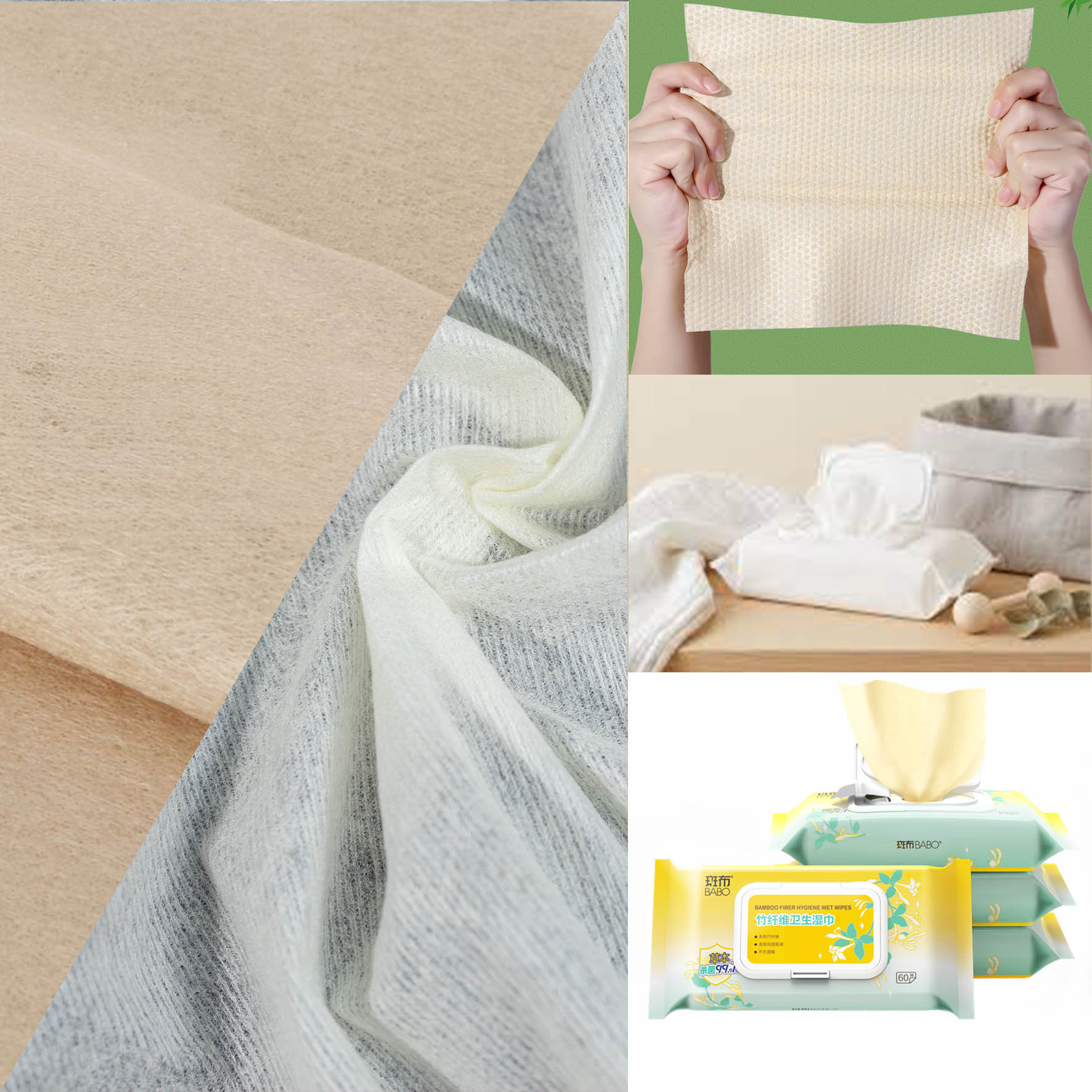
Why Are Natural Fiber Spunlace Nonwoven Fabrics Becoming More Popular?
The wet wipes market has changed significantly over the past decade.
Consumers are no longer concerned only about cleaning performance. They also pay attention to material origin, skin comfort, sustainability, and product innovation.
As a result, many premium brands are exploring Natural Fiber Spunlace Nonwoven Fabric as an alternative to conventional spunlace materials.
Although these specialty materials still represent a relatively small share of the market, they offer new possibilities for high-end personal care products.
What Is Natural Fiber Spunlace Nonwoven Fabric?
Natural Fiber Spunlace Nonwoven Fabric refers to spunlace materials that incorporate natural plant fibers, plant-derived fibers, or botanical functional ingredients.
Depending on the product design and manufacturing process, these materials may contain:
- Natural plant fibers
- Regenerated plant-based fibers
- Botanical extracts or functional finishes
The exact composition varies according to product requirements and manufacturer technologies.
Why Are Brands Interested in Natural Fiber Materials?
Compared with conventional spunlace fabrics, natural fiber materials can help brands achieve several goals.
Product Differentiation
The wet wipes market is highly competitive.
Using specialty materials allows brands to develop products that stand out from standard viscose or polyester wipes.
Premium Positioning
Consumers often associate natural ingredients with higher product quality.
Natural fiber materials help support a premium brand image.
Sustainability
Many natural fibers are derived from renewable resources.
This aligns with the growing demand for environmentally responsible products.
Consumer Appeal
Words such as “natural,” “plant-based,” and “botanical” have become increasingly attractive in personal care marketing when supported by appropriate product design and regulatory compliance.
Common Types of Natural Fiber Spunlace Nonwoven Fabric
Several specialty materials have attracted attention in recent years.
Aloe Spunlace Nonwoven Fabric
Aloe-based spunlace materials are commonly positioned for skincare applications.
Depending on product design, manufacturers may use aloe-derived functional finishes or combine aloe-related components with nonwoven fabrics.
These materials are often associated with:
- Facial wipes
- Cosmetic wipes
- Premium personal care wipes
Seaweed Spunlace Nonwoven Fabric
Seaweed-based fibers have attracted interest because of their natural origin and soft hand feel.
They are often blended with other fibers to improve overall fabric performance.
Typical applications include:
- Facial care wipes
- Beauty products
- Premium skincare wipes
Banana Fiber Spunlace Nonwoven Fabric
Banana fiber is obtained from the banana plant rather than the fruit itself.
As a renewable plant fiber, it is increasingly explored in sustainable textile development.
Potential applications include:
- Eco-friendly wet wipes
- Sustainable personal care products
- Specialty nonwoven materials
How Do Natural Fiber Materials Compare?
| Material | Main Feature | Typical Positioning | Common Applications |
|---|---|---|---|
| Aloe | Skin care concept | Premium | Facial & Personal Care Wipes |
| Seaweed | Softness & natural origin | Premium | Beauty & Skincare Wipes |
| Banana Fiber | Sustainability | Eco-Friendly | Specialty Wet Wipes |
| Bamboo Fiber | Renewable plant fiber | Premium | Baby & Personal Care Wipes |
| Lyocell | Smooth texture | Premium | High-end Wet Wipes |
| Chitosan | Functional specialty material | Luxury | Skincare & Healthcare Wipes |
Each material offers different advantages depending on product positioning.
Are Natural Fiber Spunlace Fabrics Used in Mass-Market Wet Wipes?
In most cases, no.
Conventional materials such as viscose and polyester still dominate the global wet wipes industry because they provide an excellent balance between cost and performance.
Natural fiber materials are generally selected for products that emphasize:
- Premium quality
- Product innovation
- Sustainability
- Brand differentiation
How Should Buyers Choose Natural Fiber Materials?
When evaluating Natural Fiber Spunlace Nonwoven Fabric, buyers should consider several factors.
Product Positioning
Luxury products may justify higher material costs.
Target Market
Consumer preferences differ across regions.
For example, European markets often place greater emphasis on sustainability, while Asian premium skincare brands may focus more on softness and product experience.
Material Compatibility
Natural fibers should also be evaluated together with:
- Lotion formulations
- Production processes
- Required fabric strength
- End-use applications
Laboratory and production testing remain important before commercial launch.
Future Trends
As demand for sustainable and differentiated products continues to grow, more brands are expected to explore specialty spunlace materials.
Rather than replacing conventional spunlace fabrics, these natural fiber solutions are likely to expand opportunities in premium and niche markets where added value is more important than minimizing cost.
FAQ
1. What is Natural Fiber Spunlace Nonwoven Fabric?
It refers to spunlace materials made with natural fibers, plant-derived fibers, or botanical functional components.
2. Are natural fiber spunlace fabrics widely used?
They are mainly used in premium and specialty applications rather than mass-market wet wipes.
3. Is aloe spunlace made from aloe fiber?
Not always. Depending on the product, aloe may be incorporated through botanical finishes, functional treatments, or other manufacturing methods.
4. What are the advantages of seaweed fiber?
Seaweed fibers are valued for their natural origin and are often used in premium personal care textiles.
5. Why is banana fiber attracting attention?
Because it is a renewable plant fiber that supports sustainable product development.
6. Are natural fiber wipes more expensive?
Generally yes. Specialty raw materials and more complex manufacturing processes often increase production costs.
Why Choose Weboss?
Weboss develops and supplies a wide range of specialty spunlace nonwoven materials for wet wipes and personal care applications.
Our portfolio includes:
- Aloe functional spunlace nonwoven fabric
- Seaweed spunlace nonwoven fabric
- Banana fiber spunlace nonwoven fabric
- Bamboo fiber spunlace nonwoven fabric
- Lyocell spunlace nonwoven fabric
- Chitosan spunlace nonwoven fabric
- PLA spunlace nonwoven fabric
With more than 10 years of export experience, we help customers select materials that balance performance, sustainability, product positioning, and manufacturing efficiency.
Contact Us
Shanghai Weboss New Material Technology Co., Ltd
TEL: +86-21-33608891
FAX: +86-21-33608892
Email: info@webosstex.com
continue reading
Related Posts

Apertured Spunlace has an open mesh structure for better wiping, liquid pickup and airflow in dry towels, wipes and beauty products.

Polyester Spunlace for Wet Wipes offers high wet strength and durability for cleaning, disinfecting and industrial wipes.
-
Cotton Spunlace for Wet Wipes offers a soft, absorbent and natural feel for premium baby, facial and personal care wipes.