What Is Chitosan Spunlace Non Woven Fabric?
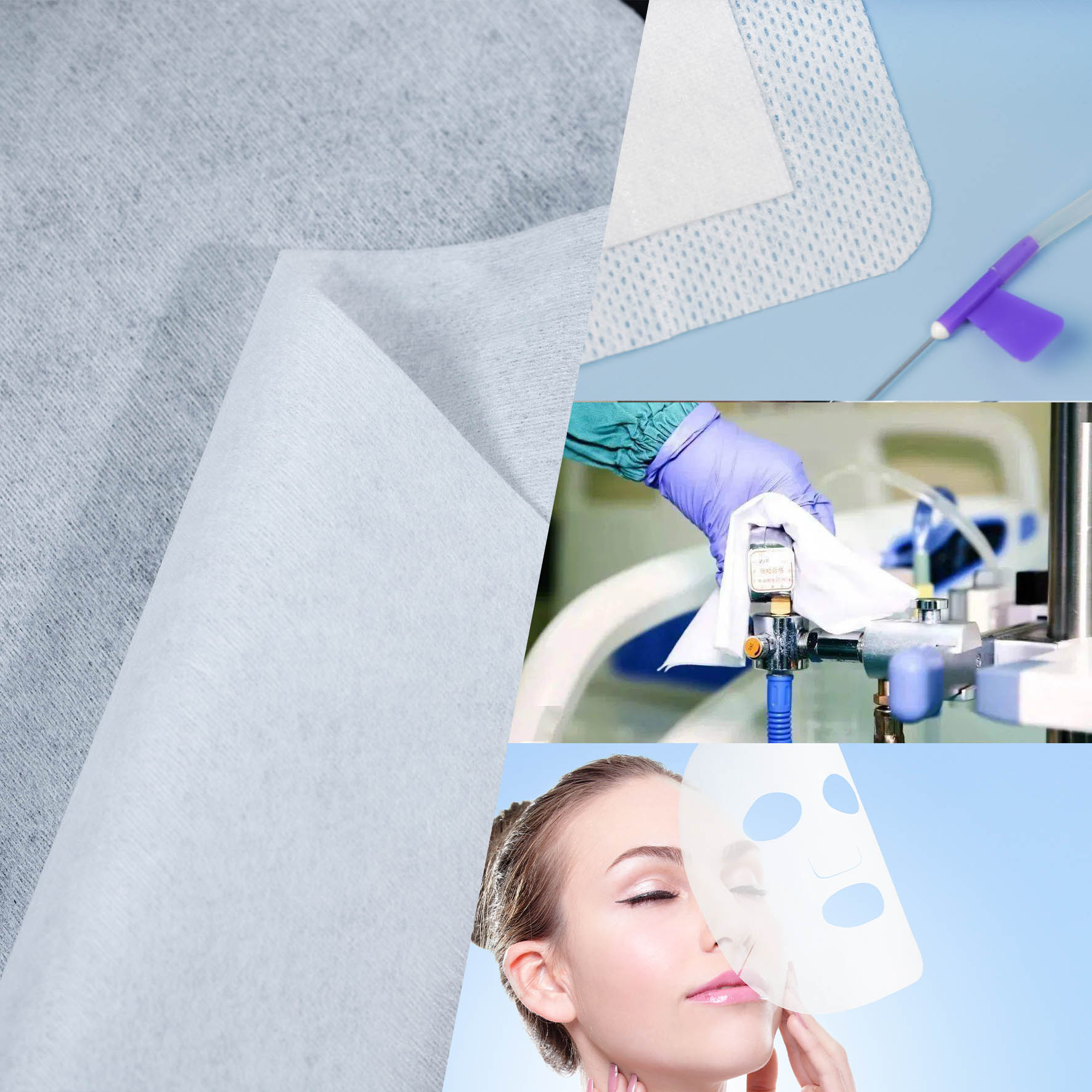
What Is Chitosan Spunlace Non Woven Fabric?
Chitosan spunlace non woven fabric is made by combining spunlace technology with chitosan-based fibers or finishes.
Chitosan itself is a natural substance derived from chitin (usually from shrimp or crab shells), and it is known for its antibacterial and biocompatible properties.
So compared to regular spunlace fabric, the main difference is:
👉 It doesn’t just clean — it also helps inhibit bacteria
In real projects, this type of material is usually considered when standard spunlace is no longer enough.
Why Do Some Buyers Choose Chitosan Spunlace?
From actual customer discussions, people usually look at this material when they need more than just softness and absorbency.
1. Built-in Antibacterial Performance
This is the main reason.
Chitosan has natural antibacterial properties, which means:
- It can help reduce bacterial growth
- It’s suitable for hygiene-sensitive applications
👉 For example, some clients use it in:
- Medical wipes
- Wound care products
- Personal hygiene items
2. Skin-Friendly and Biocompatible
Compared to some chemical antibacterial treatments, chitosan feels more “natural”.
In practice:
- Less irritation risk
- More suitable for sensitive skin
👉 This is especially important for products like:
- Baby wipes
- Facial care
- Medical dressings
3. Good Absorbency (Same as Spunlace Base)
Because it’s still a spunlace structure:
- It keeps good liquid absorption
- Works well with disinfectants or solutions
4. Eco-Oriented Option (But Not Always Fully Biodegradable)
Some buyers assume it’s fully eco-friendly.
👉 This is where it needs clarification:
- Chitosan itself is natural
- But the base fiber (polyester / viscose) still matters
👉 So whether it’s eco-friendly depends on the full composition, not just the coating
How Is It Different from Regular Spunlace Fabric?
Here’s a practical comparison:
| Feature | Chitosan Spunlace Nonwoven | Regular Spunlace Nonwoven |
|---|---|---|
| Antibacterial | Yes | No (unless treated) |
| Skin Friendliness | Higher | Good |
| Cost | Higher | Lower |
| Functionality | Functional (active) | Basic (passive) |
| Applications | Medical, hygiene | General cleaning, wipes |
👉 Simple way to understand:
Regular spunlace = cleaning material
Chitosan spunlace = functional + hygiene-focused material
Where Is Chitosan Spunlace Non Woven Fabric Used?
From actual usage cases, it’s mainly used in higher-end or more sensitive applications.
1. Medical and Healthcare Products
- Wound care materials
- Medical wipes
- Surgical-related products
👉 Especially where bacterial control matters
2. Personal Care and Hygiene
- Facial wipes
- Baby wipes
- Feminine hygiene products
👉 Customers in this segment often care about “gentle + safe”
3. High-End Cleaning Products
Some premium cleaning brands use it for:
- Antibacterial wipes
- Skin-contact cleaning
How to Decide If You Really Need Chitosan Spunlace?
This is where many buyers hesitate, and honestly, not everyone needs it.
1. Do You Actually Need Antibacterial Function?
Ask yourself:
- Is your product used on skin?
- Is hygiene a key selling point?
👉 If yes → consider it
👉 If not → regular spunlace may be enough
2. Are You Targeting a Premium Market?
Chitosan increases cost.
👉 It makes more sense if:
- You are selling high-end products
- Your customers care about added value
3. Is Certification Required?
Some markets may require:
- Antibacterial testing reports
- Safety verification
👉 This should be confirmed early, not after production
4. Are You Comparing It with Other Antibacterial Options?
There are other solutions:
- Silver-based treatments
- Chemical finishes
👉 Chitosan is often chosen when customers prefer:
- More natural positioning
- Better skin compatibility
Common Mistakes Buyers Make
1. Assuming It Is Always Better
Not necessarily.
👉 If your product is basic cleaning, it may just increase cost.
2. Ignoring the Base Fabric
Chitosan is only one part.
👉 The real performance still depends on:
- Fiber composition
- GSM
- Structure
3. Not Testing Real Performance
Antibacterial effect can vary.
👉 Always request samples and test under real conditions.
FAQ About Chitosan Spunlace Non Woven Fabric
1. Is chitosan spunlace fabric antibacterial?
Yes, it has natural antibacterial properties, but performance depends on formulation.
2. Is it safe for skin?
Generally yes, and often used in sensitive applications.
3. Is it biodegradable?
Partially depends on fiber composition (viscose vs polyester).
4. Is it more expensive than regular spunlace?
Yes, due to added functional treatment.
5. Can it be used for medical products?
Yes, especially in hygiene-sensitive applications.
6. What is the main advantage?
Antibacterial function combined with softness.
7. Can it replace regular spunlace?
Only when antibacterial function is needed.
8. Can it be customized?
Yes, including GSM, fiber blend, and treatment level.
Why Choose Weboss as Your Chitosan Non Woven Supplier?
At Weboss, we don’t just supply materials — we help customers choose what actually fits their product.
From our experience:
- Not every customer needs chitosan
- But for the right application, it can make a real difference
Here’s what we offer:
- 10+ years of nonwoven export experience
- Experience with functional spunlace materials
- Support in choosing between:
- Regular spunlace
- Antibacterial options
- Strict quality control and testing support
- Flexible customization based on your product
- Reliable delivery and export service
👉 We focus on giving practical solutions, not just selling higher-priced materials.
Contact Us
If you are looking for a reliable spunlace nonwoven fabric supplier, feel free to contact us:
- TEL: +86-21-33608891
- FAX: +86-21-33608892
- Email: info@webosstex.com
continue reading
Related Posts

Apertured Spunlace has an open mesh structure for better wiping, liquid pickup and airflow in dry towels, wipes and beauty products.

Polyester Spunlace for Wet Wipes offers high wet strength and durability for cleaning, disinfecting and industrial wipes.
-
Cotton Spunlace for Wet Wipes offers a soft, absorbent and natural feel for premium baby, facial and personal care wipes.