What Is PLA Spunbond Nonwoven Fabric?
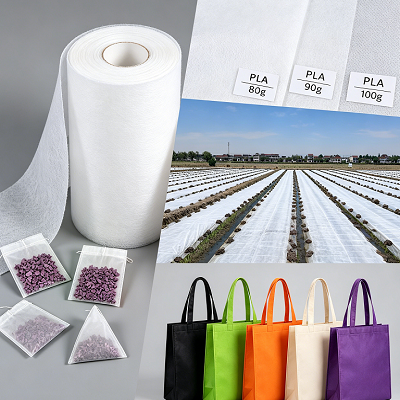
As global regulations on plastic reduction tighten and sustainability becomes a core driver of industrial transformation, PLA Spunbond Nonwoven Fabric has emerged as one of the most important eco-friendly materials in the nonwoven industry. Made from renewable resources such as corn starch and sugarcane, PLA (Polylactic Acid) spunbond fabric offers a biodegradable alternative to traditional petroleum-based polypropylene (PP) nonwovens. It combines lightweight structure, breathability, softness, and industrial versatility, making it widely used in packaging, medical, hygiene, agriculture, and disposable product applications. In 2026, with increasing ESG requirements and rising consumer demand for sustainable products, PLA spunbond nonwoven fabric is rapidly gaining global market attention as a key material supporting the transition toward a circular and low-carbon economy.
What Is PLA Spunbond Nonwoven Fabric?
PLA spunbond nonwoven fabric is a biodegradable nonwoven material made from polylactic acid (PLA) fibers through a spunbond manufacturing process. It combines sustainability, lightweight performance, breathability, and industrial versatility, making it one of the fastest-growing eco-friendly textile materials in 2026.
PLA (Polylactic Acid) is a bio-based polymer derived primarily from renewable resources such as corn starch, cassava, or sugarcane. Unlike traditional petroleum-based nonwoven fabrics, PLA spunbond fabric offers lower carbon emissions and industrial compostability under suitable conditions.
Spunbond nonwoven fabric manufacturers such as WEBOSS are helping manufacturers worldwide transition to environmentally responsible nonwoven solutions with customized PLA spunbond materials.
What is PLA Spunbond?
PLA spunbond is a nonwoven fabric manufacturing technology that transforms PLA polymer into continuous filaments bonded together through heat and pressure.
The spunbond process involves:
- Melting PLA resin
- Extruding continuous filaments
- Cooling and stretching fibers
- Forming a web structure
- Thermal bonding
The result is a durable yet lightweight fabric with excellent breathability and softness.
Compared with woven textiles, PLA spunbond nonwoven fabric is:
- Faster to manufacture
- More cost-efficient
- Suitable for disposable and semi-durable applications
- Environmentally friendlier than petroleum-based alternative
Key Technical Specifications of PLA Spunbond Fabric
| Property | Typical Range |
|---|---|
| Material | Polylactic Acid (PLA) |
| Weight | 15–120 gsm |
| Width | Up to 320 cm |
| Biodegradability | Industrially compostable |
| Breathability | Excellent |
| Tensile Strength | Medium to High |
| Water Resistance | Moderate |
| Renewable Source | Yes |
Advantages of PLA Spunbond Nonwoven Fabric
PLA spunbond nonwoven fabric offers environmental, functional, and branding advantages for companies seeking sustainable material solutions.
Biodegradable and Eco-Friendly
PLA is derived from renewable biomass instead of fossil fuels. Under industrial composting conditions, PLA materials can decompose significantly faster than conventional plastics.
According to European Bioplastics, global bioplastics production capacity is expected to continue expanding as sustainability regulations increase worldwide.
Environmental Benefits:
- Reduced petroleum dependence
- Lower carbon footprint
- Reduced plastic pollution
- Supports ESG and sustainability goals
Excellent Breathability
PLA spunbond fabric allows air circulation while maintaining structural integrity. This makes it ideal for:
- Hygiene products
- Medical textiles
- Agricultural covers
- Packaging applications
Soft and Comfortable Texture
Compared with many traditional synthetic nonwoven materials, PLA fabric has:
- Softer hand feel
- Better skin compatibility
- Improved user comfort
This is particularly valuable in disposable medical and personal care products.
Lightweight Yet Durable
PLA spunbond fabrics provide:
- High strength-to-weight ratio
- Efficient material usage
- Reduced shipping costs
Many industries choose PLA because it balances sustainability with industrial performance.
Strong Brand Sustainability Appeal
Consumers increasingly prefer eco-friendly products.
A 2025 sustainability packaging survey reported that more than 70% of global consumers are willing to pay more for sustainable packaging solutions.
Companies using PLA spunbond materials can strengthen:
- Green branding
- Corporate sustainability reporting
- Consumer trust
- Regulatory compliance
What Is PLA Spunbond Non Woven Fabric Used For?
PLA spunbond non woven fabric is widely used in packaging, agriculture, hygiene, medical, filtration, and disposable textile industries.
Packaging Industry
PLA spunbond fabric is increasingly used for:
- Eco shopping bags
- Dust-proof packaging
- Gift wrapping
- Protective product packaging
Sustainable packaging demand continues growing globally due to plastic reduction policies.
Medical and Hygiene Products
Applications include:
- Surgical gowns
- Face masks
- Disposable caps
- Hygiene liners
- Medical packaging
PLA materials are valued for:
- Breathability
- Cleanliness
- Skin-friendliness
Agricultural Applications
PLA spunbond fabric is used for:
- Crop covers
- Weed control fabrics
- Seed protection layers
- Soil temperature management
Its biodegradable nature reduces agricultural plastic waste.
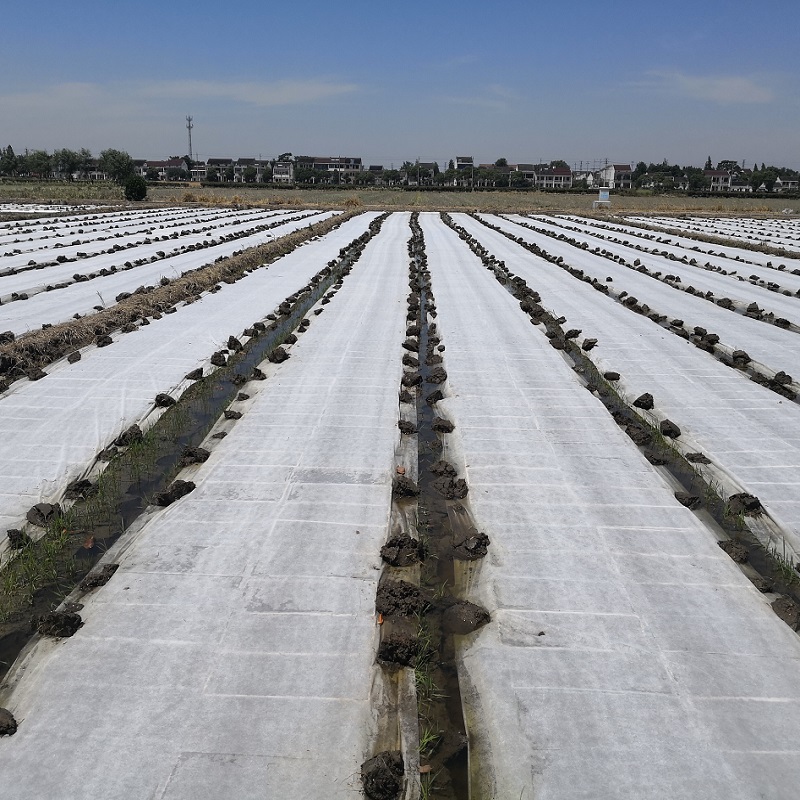
PLA spunbond nonwoven fabric for agricultural cover
Home Textile and Furniture
Manufacturers use PLA nonwoven materials for:
- Mattress layers
- Sofa linings
- Cushion support materials
- Bedding application
Industrial Filtration
PLA spunbond fabrics can also support:
- Air filtration
- Dust filtration
- Industrial disposable filtration systems
PLA vs PP Spunbond Nonwoven Fabric: What Is the Difference?
PLA and PP spunbond nonwoven fabric differ mainly in raw material source, biodegradability, environmental impact, and heat resistance.
PLA vs PP Comparison Table
| Feature | PLA Spunbond | PP Spunbond |
|---|---|---|
| Raw Material | Renewable biomass | Petroleum-based |
| Biodegradable | Yes (industrial composting) | No |
| Carbon Footprint | Lower | Higher |
| Softness | Excellent | Good |
| Heat Resistance | Moderate | Higher |
| Sustainability | Excellent | Limited |
| Cost | Higher | Lower |
| Eco Branding Value | Strong | Moderate |
| Regulatory Compliance | Better for green policies | Increasing restrictions |
Which One Is Better?
The answer depends on application priorities.
Choose PLA spunbond if you need:
- Sustainable branding
- Eco-compliance
- Biodegradable materials
- Green packaging solutions
Choose PP spunbond nonwoven fabric if you prioritize:
- Lower cost
- Higher heat resistance
- Traditional industrial usage
As sustainability regulations tighten in Europe and North America, many manufacturers are transitioning from PP to PLA solutions.
What Is The Market Demand of PLA Spunbond Nonwoven Fabric?
The global demand for PLA spunbond nonwoven is rapidly increasing due to sustainability regulations, consumer awareness, and green manufacturing initiatives.
Growing Global Bioplastics Market
According to industry forecasts, the global bioplastics market is expected to exceed USD 40 billion before 2030.
Major growth drivers include:
- EU plastic reduction policies
- Corporate ESG requirements
- Sustainable packaging demand
- Consumer environmental awareness
- Medical disposable product expansion
Key Industries Driving Demand
1. Sustainable Packaging
Packaging companies are replacing petroleum-based plastics with bio-based alternatives.
2. Medical and Hygiene
Hospitals and healthcare suppliers increasingly seek eco-friendly disposable products.
3. Agriculture
Biodegradable agricultural textiles help reduce soil contamination.
4. Retail and E-Commerce
Brands want environmentally friendly packaging to improve customer perception.
Asia-Pacific Leads Production
China remains one of the largest manufacturing hubs for PLA nonwoven fabrics due to:
- Strong supply chains
- Scalable production
- Export capabilities
- Government sustainability support
Spunbond nonwoven fabric manufacturers like WEBOSS provide customized PLA spunbond solutions for global buyers.
FAQs
1. Is PLA Spunbond Nonwoven Fabric Really Biodegradable?
Yes. PLA spunbond nonwoven fabric is biodegradable under industrial composting conditions with controlled temperature and humidity. It decomposes significantly faster than conventional petroleum-based plastics.
2. Why is PLA popular in sustainable packaging?
PLA is popular because it is bio-based, renewable, compostable, and supports corporate sustainability goals. It also helps brands comply with increasing plastic reduction regulations worldwide.
3. Is PLA fabric waterproof?
PLA spunbond fabric offers moderate water resistance but is not completely waterproof unless additional coatings or lamination treatments are applied.
4. Is PLA spunbond fabric safe for skin contact?
Yes. PLA nonwoven fabric is generally considered skin-friendly and is commonly used in hygiene and medical disposable products.
5. Can PLA spunbond fabric replace PP nonwoven fabric completely?
Not entirely. PP still performs better in some high-temperature and low-cost applications. However, PLA is becoming a strong alternative in eco-focused industries.
6. What industries use PLA spunbond nonwoven fabric the most?
The largest users include:
- Packaging
- Agriculture
- Medical
- Hygiene
- Retail
- Home textiles
Conclusion
PLA spunbond non woven fabric is one of the most promising sustainable materials in the global nonwoven industry in 2026.
Its combination of:
- Biodegradability
- Renewable sourcing
- Breathability
- Lightweight durability
- Sustainable branding value
makes it highly attractive across packaging, medical, agriculture sectors. As environmental regulations strengthen and consumers increasingly demand greener products, PLA spunbond non woven fabric is expected to experience significant long-term market growth.
Manufacturers and brands that adopt sustainable nonwoven solutions early can gain both regulatory advantages and stronger customer trust. For customized PLA spunbond nonwoven solutions, businesses can explore Weboss PLA nonwoven solutions.
Contact Us
If you are looking for a reliable spunbond nonwoven fabric supplier, feel free to contact us:
- TEL: +86-21-33608891
- FAX: +86-21-33608892
- Email: info@webosstex.com
continue reading
Related Posts

Apertured Spunlace has an open mesh structure for better wiping, liquid pickup and airflow in dry towels, wipes and beauty products.

Polyester Spunlace for Wet Wipes offers high wet strength and durability for cleaning, disinfecting and industrial wipes.
-
Cotton Spunlace for Wet Wipes offers a soft, absorbent and natural feel for premium baby, facial and personal care wipes.